
Pickleball clinics
Pickleball clinics are short-form coaching sessions built to improve specific skills faster than casual play usually can. They are commonly organized around a level, a theme, or a goal—for example, beginner fundamentals, dinking, third-shot drops, transition-zone play, doubles strategy, or match tactics. USA Pickleball also supports learn-to-play clinic formats through its community outreach programs, while PPR serves as the official education and certification partner of USA Pickleball for instructor training.
What a pickleball clinic usually is
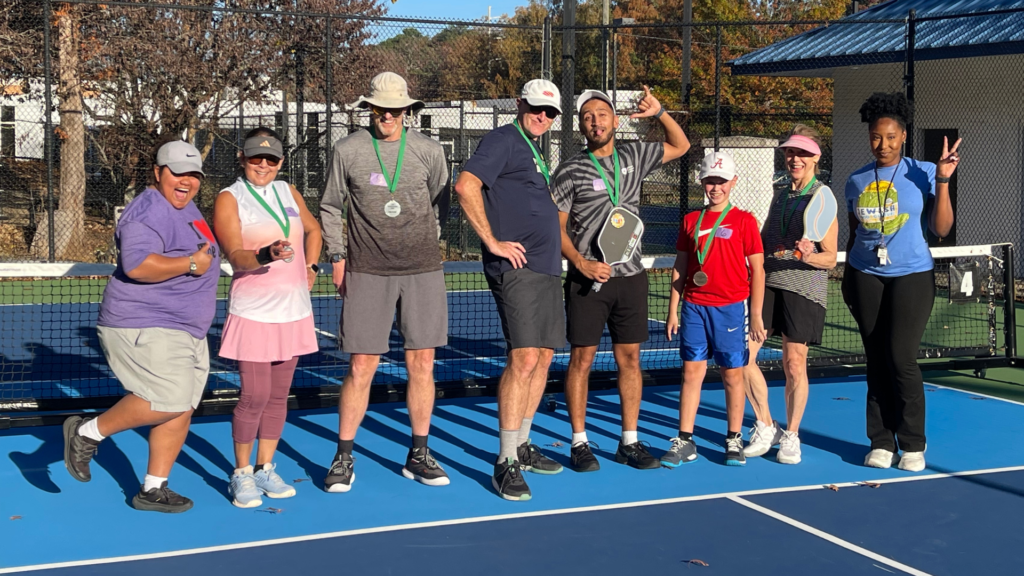
A clinic is typically more structured than an open play session and shorter than a multi-day camp. Instead of simply rotating through games, players work through drills, coach feedback, and guided repetitions. Many programs separate players by skill level so beginners can focus on grips, rules, serves, returns, and positioning, while stronger players work on shot selection, point construction, and pressure situations. Large organizers like Nike Sports Camps explicitly group players by age and ability and offer beginner, intermediate, and all-skills formats.
Types of pickleball clinics
The most common clinic types are:
Beginner clinics. These focus on learning the rules, scoring, court positioning, serving, basic volleys, and confidence-building. USA Pickleball’s community learn-to-play clinics are a good example of this format.
Improver or intermediate clinics. These usually emphasize consistency, net play, resets, third-shot drops, transitions, and smarter doubles movement. PPR’s Level 1 certification workshops are specifically geared toward instructors working with beginner and improver players, which reflects the kinds of themes clinics at this level often cover.
Advanced clinics. These are more strategy-heavy and often include faster live-ball drills, decision-making, pace variation, attacking patterns, and partner communication. Multi-day camps and resort clinics often advertise these higher-level formats alongside intermediate options.
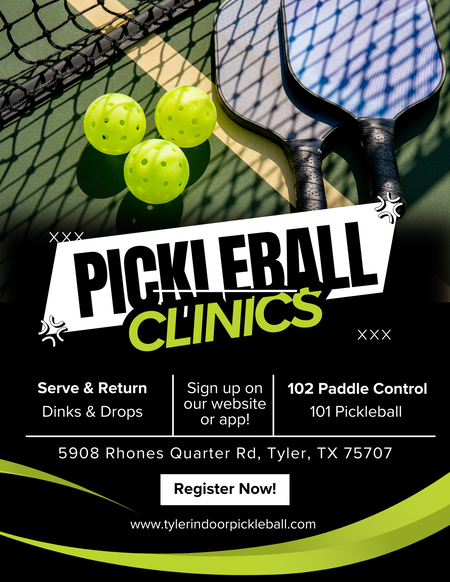
Specialty clinics. These target one area only, such as serve and return, kitchen play, doubles strategy, or match IQ. Even when a clinic isn’t labeled “specialty,” many better programs still have a clear theme for each session. This is especially common in shorter 2-day or focused weekend clinic models.
What happens during a clinic
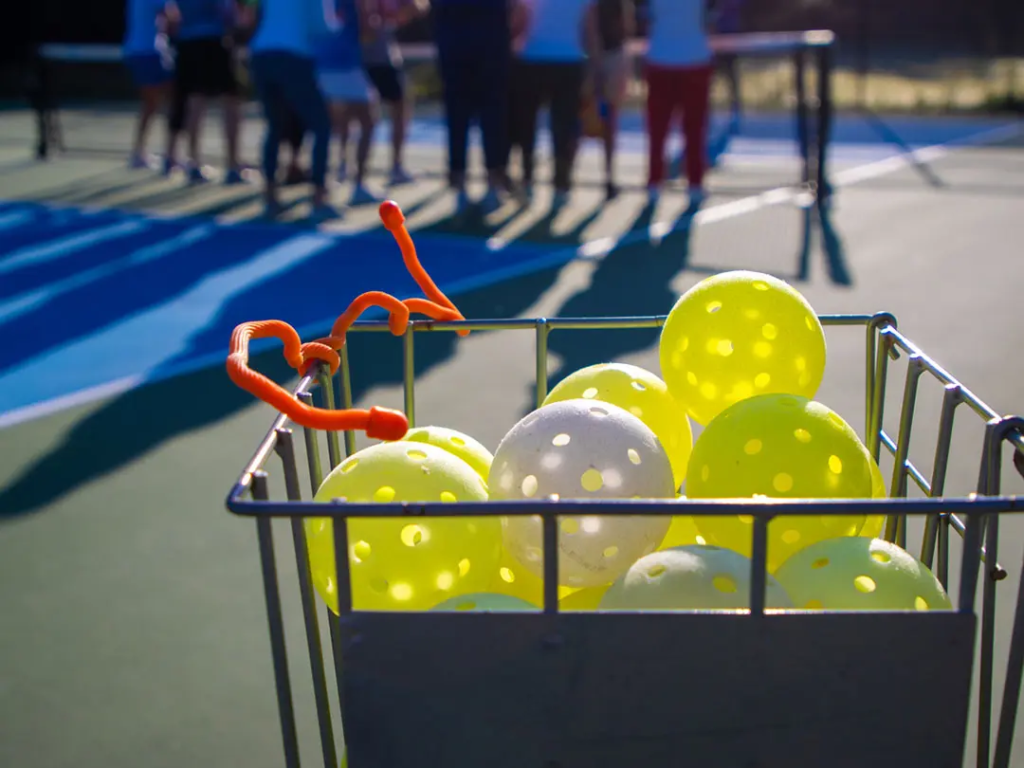
A solid clinic usually starts with a quick level check or warm-up, then moves into progressive drills. Coaches demonstrate the skill, explain the purpose, then build the drill from simple repetitions into more realistic game situations. The strongest clinics do not just feed balls endlessly—they connect each drill to actual match scenarios.
In larger commercial programs, this often means a mix of instruction, match play, and low coach-to-player ratios. For example, some Nike adult camps highlight around 11 hours of instruction and match play, while others advertise 12 hours of court time over several days and include technical work plus offense/defense strategy.
Who should take a pickleball clinic
Clinics are best for players who want faster improvement than they are getting from random rec play. They are especially useful if:
- you’re new and want a proper foundation
- you’ve plateaued at your current level
- you keep losing in the same ways
- you need feedback on mechanics
- you want structured reps instead of just playing points
They are often a better value than private lessons for players who want coaching but do not need one-on-one attention. They also work well for players who learn better in a group setting and enjoy seeing how others solve the same problems.
Pickleball Clinics — Pros & Cons
| Pros 👍 | Cons 👎 |
|---|---|
| Affordable compared to private lessons | Limited individual attention |
| Great for beginners and intermediates | Not ideal for fixing very specific issues |
| Structured learning (drills + coaching) | Quality varies a lot depending on coach |
| High repetition of key skills | Can feel repetitive or basic |
| Learn proper technique early | May not match your exact skill level |
| Social and fun (meet other players) | Less personalized feedback |
| Helps break plateaus | Progress can be slower than private lessons |
| Covers common mistakes and fundamentals | Group size can be too large |
| Builds confidence quickly | Fixed schedule (less flexible) |
| Good value for money | Some clinics feel like paid open play |
How to tell if a clinic is good
A good clinic usually has five things:
Clear skill-level placement. You should know whether it is beginner, improver, intermediate, or advanced. Programs that group players carefully tend to produce better sessions.
Qualified instructors. PPR certification is one sign that a coach has gone through a recognized education pathway tied to USA Pickleball’s official certification partner. It is not the only sign of quality, but it is a useful one.
A specific theme. “Improve everything” is usually weaker than “third-shot drop and transition clinic” or “beginner scoring and positioning.”
Reasonable player-to-coach ratio. The lower, the better—especially for mechanics and tactical feedback. Some camp providers advertise low camper-to-coach ratios as a selling point.
A match-application component. Drills should connect to point play, not exist in isolation.
What clinics usually cost
Prices vary widely depending on the coach, the venue, the duration, and whether it is a local clinic or a destination experience. Multi-day resort-style camps can cost several hundred dollars; for example, Nike adult camp listings show 3-day sessions from around $439 to $499 at some locations. Local park or club clinics are often much cheaper than travel-based or resort formats.
Clinics vs private lessons
| Feature | Clinics | Private Lessons |
|---|---|---|
| Format | Group sessions (usually 4–12+ players) | One-on-one (or sometimes 2 players max) |
| Cost | Lower cost per person | Higher cost per session |
| Personal Attention | Limited (shared with group) | 100% focused on you |
| Skill Improvement Speed | Moderate (depends on feedback quality) | Fast (targeted corrections) |
| Best For | Beginners & intermediates, general improvement | Specific problems, advanced players |
| Structure | Pre-planned drills and themes | Fully customized to your needs |
| Feedback Quality | General + occasional individual tips | Detailed, constant correction |
| Repetition (Drills) | High volume, but less personalized | High + tailored to your weaknesses |
| Social Aspect | High (meet players, fun atmosphere) | Low (focused, serious training) |
| Level Matching | Grouped by level (not always perfect) | Perfectly matched to you |
| Flexibility | Fixed schedule | Flexible timing |
| Game Simulation | Often includes group play | Can be simulated but less natural |
| Motivation | Group energy helps | Requires self-motivation |
| Value for Money | High for general skills | High for targeted improvement |
| Common Downside | Less individual attention | Expensive |
Clinics vs camps
| Feature | Clinics | Camps |
|---|---|---|
| Duration | Short (1–3 hours or 1–2 days) | Longer (2–5+ days) |
| Format | Focused sessions | Immersive multi-day experience |
| Cost | Lower | Higher (often significantly) |
| Skill Focus | Specific skills (e.g., dinking, serves) | Full game development (all areas) |
| Intensity | Moderate | High (multiple sessions per day) |
| Learning Depth | Surface to moderate | Deep, comprehensive improvement |
| Best For | Quick improvement or trying something new | Serious improvement or skill transformation |
| Coaching Time | Limited hours | Many hours (10–20+ total) |
| Personal Feedback | Some, but shared | More frequent, but still group-based |
| Structure | One theme per session | Structured progression over days |
| Game Play | Sometimes included | Always included (often daily) |
| Environment | Local courts, clubs, parks | Resorts, academies, or dedicated facilities |
| Travel Required | Usually no | Often yes (destination-based) |
| Social Experience | Medium | High (community + networking) |
| Physical Demand | Low–moderate | Moderate–high (multiple sessions/day) |
| Customization | Limited | Slightly more (grouped by level) |
| Commitment Level | Low | High (time + money) |
| Common Downside | Less depth | Expensive + time-consuming |
Best Pickleball Clinics in the USA
1. Nike Pickleball Camps (Top Overall)

Why it’s #1:
- Available in 30+ states
- Coaches include certified pros & top players
- Strong structure: drills + match play + feedback
- Low coach-to-player ratio (good attention)
Best for: Beginners → Intermediate
Formats: 1–3 day clinics, camps, bootcamps
Example: 2-day clinics around ~$149–$299
👉 If you want a safe, high-quality option anywhere in the US — this is the best choice.
2. Better Pickleball (Best Training System)
Why it’s great:
- Uses a structured system (“3 pillars” training)
- Focuses on real game strategy, not just drills
- Known for helping players break plateaus
Best for: Intermediate → Advanced
Focus: Strategy, decision-making, smart play
👉 Perfect if you already play but feel stuck at the same level
3. IMG Academy (Elite Training Experience)

Why it stands out:
- World-class training environment
- Professional-level coaching and structure
- Focus on athletic performance + technique
Best for: Serious players / athletes
Location: Florida
👉 This is more like pro-level training, not casual clinics
4. Engage Pickleball Camps (Best All-Around Development)

Why players love it:
- Covers entire game (technique + strategy)
- Strong real-world feedback from participants
“No substitute for in-person instruction and feedback”
Best for: Beginner → Intermediate (especially 3.0–4.0 players)
👉 Great balance between learning + playing
5. PPR Certified Clinics (Best for Quality Coaches)

Why it matters:
- PPR = official coaching certification partner
- Clinics led by trained, standardized instructors
- More consistent teaching quality
Best for: All levels
👉 If you want reliable coaching quality, look for PPR-certified clinics
🧠 Quick Comparison
| Clinic | Best For | Level | Strength |
|---|---|---|---|
| Nike Camps | Overall best | Beginner–Intermediate | Structure + availability |
| Better Pickleball | Strategy improvement | Intermediate–Advanced | Smart play system |
| IMG Academy | Elite training | Advanced | Professional environment |
| Engage Camps | Balanced learning | Beginner–Intermediate | Full-game development |
| PPR Clinics | Reliable coaching | All levels | Certified instructors |
🔥 Final Recommendation
- Beginner → Intermediate: 👉 Nike Camps
- Stuck / Plateau: 👉 Better Pickleball
- Serious / Competitive: 👉 IMG Academy
- Balanced Learning: 👉 Engage Camps
My overall review
Overall verdict: Pickleball clinics are usually worth it for the right player.
They are one of the best ways to improve faster than casual rec play, especially if you are stuck in the beginner-to-intermediate range. A good clinic gives you structure, repetition, tactical understanding, and confidence. A bad clinic feels like a paid open play session.
Rating
Instructional value: 8/10
Value for money: 7.5/10
Beginner friendliness: 9/10
Advanced-player usefulness: 6.5/10
Overall: 8/10
The biggest factor is not whether clinics are good in general. It is whether that specific clinic has the right coach, level, and format for you.
How to choose the right pickleball clinic
Before booking, check:
- your true skill level
- the clinic theme
- coach credentials and experience
- player-to-coach ratio
- whether live-ball/match application is included
- session length
- refund policy
- whether it is local, club-based, or destination-style
If you want a formal place to start looking, USA Pickleball’s coaching resources and PPR’s coach directory are useful reference points, and larger providers like Nike Sports Camps offer widely available clinic and camp listings.
Final takeaway
If you want to get better at pickleball without jumping straight into expensive private instruction, clinics are one of the smartest formats to try. They work best when they are focused, level-matched, and coached by someone who can actually teach—not just play well.
For newer players, they can dramatically shorten the learning curve. For intermediate players, they can break plateaus. For advanced players, they are worth it mainly when the topic is specific and the instructor is strong.
If you want, I can turn this into a more polished SEO article with title, meta description, FAQs, and headings in the same style as your other “full guide and review” posts.
READ ALSO: Best pickleball camp

Harry is a freak who often argues that O in his name may well stand for “Obsessed with Pickleball.”
- What is pickleball clinics? - April 7, 2026
- Best pickleball camp - March 9, 2026
- Most expensive pickleball paddle - February 10, 2026